
Published July 30, 2026
The Great Migration is not a single event you either catch or miss. Over 1.5 million wildebeest and hundreds of thousands of zebra move in a broadly predictable loop through the Serengeti-Mara ecosystem all year. The real question is not "when is migration season" but "which part of the migration do you want to see."
The herds gather on the short-grass plains of the southern Serengeti and the Ndutu area, where up to 8,000 wildebeest calves can be born in a single day at the peak in February. It is spectacular for predator action, since newborn calves draw lions, cheetahs, and hyenas in large numbers.
As the southern plains dry out, the herds begin moving north and west through the central Serengeti. This coincides with the long rains, so it is quieter and greener, with lower lodge rates, but wildlife viewing takes a bit more patience.
The migration reaches the western Serengeti and the Grumeti River, where crocodiles wait for crossing opportunities. Grumeti crossings are less famous than the Mara River ones but can be just as dramatic, with far fewer vehicles watching.
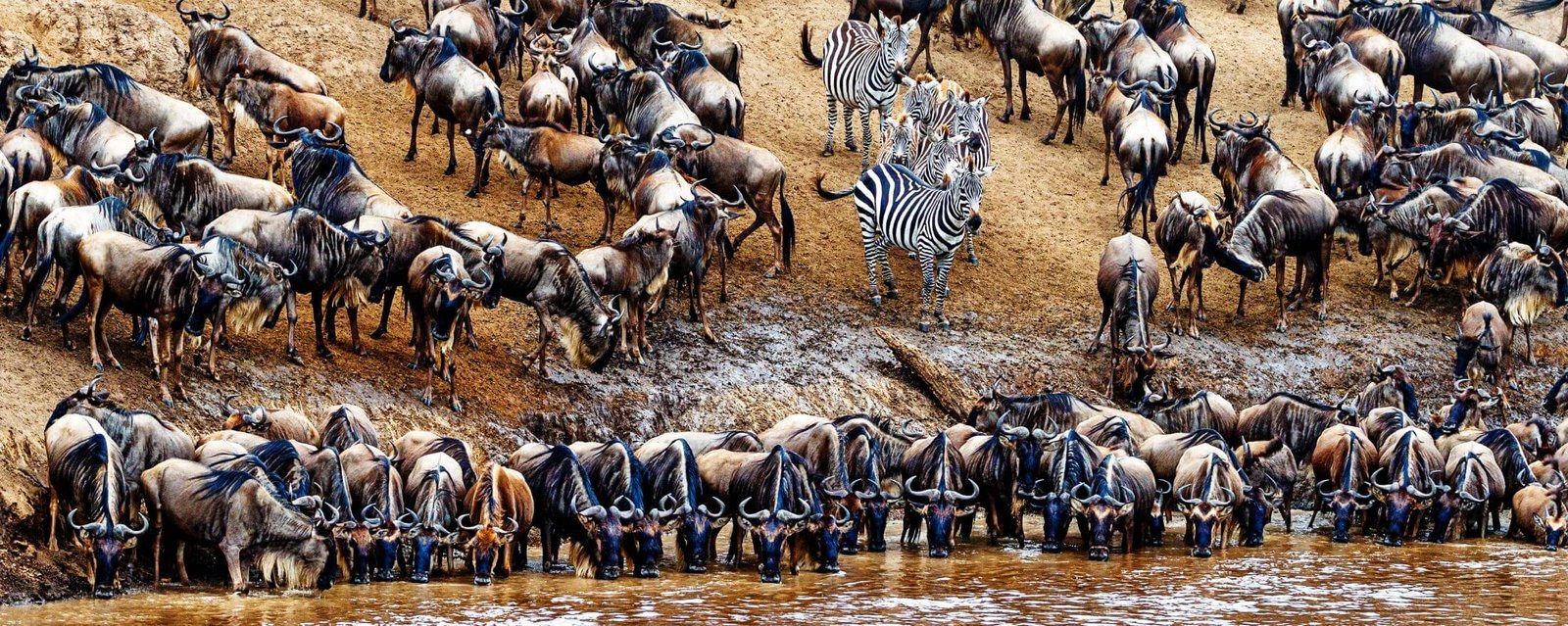
This is the migration at its most famous: herds crossing the Mara River into Kenya's Maasai Mara and back, with genuine risk from crocodiles and steep banks. It is the single most sought-after migration sighting, and northern Serengeti camps book up well in advance for this window.
As the short rains begin, the herds start their journey back toward the southern plains, ready to calve again in the new year. It is a transitional month with less predictable herd locations, but also fewer crowds.
If a river crossing is the single thing you want to see, aim for August to October and expect to pay northern Serengeti premium rates. If you would rather see newborn calves and heavy predator action without the crowds, December to February is genuinely excellent and often better value. There is no wrong time to see the migration — only a question of which chapter of the story you want front-row seats for. Tell us what you are hoping to see, and we will build your itinerary around wherever the herds will actually be.
Tell us your dates, group size, and what you're picturing — we'll reply with a tailored, honest quote within 24 hours.
Request a Free Quote